
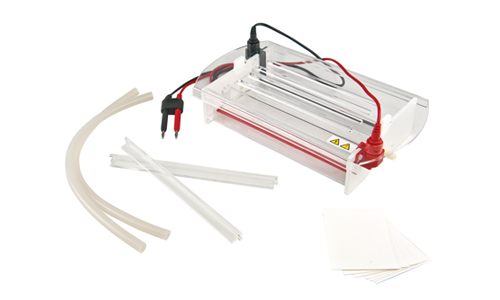
In the landscape of electrophoresis systems, two formidable contenders emerge: the Cellulose Acetate Membrane Horizontal Electrophoresis YR03423 by Kalstein and the Minicell EC370 Horizontal Electrophoresis System from Thermo Fisher Scientific. Both systems boast innovative features designed to enhance laboratory performance, yet subtle differences in design and application may influence your choice.
Kalstein’s YR03423 offers a unique blend of precision and efficiency. This model integrates cellulose acetate membranes for enhanced resolution of proteins, nucleic acids, and other molecules. On the other hand, the Minicell EC370 by Thermo Fisher is designed for quick and easy electrophoresis runs, striving to maintain robust performance across diverse applications. Let’s delve deeper into a comparative analysis of these two systems.
| Feature | Kalstein YR03423 | Thermo Fisher Minicell EC370 |
|---|---|---|
| Membrane Type | Cellulose Acetate | Agarose |
| Resolution | High | Moderate |
| Sample Capacity | Variable | Limited |
| Price Range | Competitive | Moderate to High |
How They Work
The Kalstein YR03423 utilizes cellulose acetate membranes to facilitate high-resolution electrophoresis. This system is proficient in resolving complex protein and nucleic acid samples, offering superior results with reduced run times. The robust design ensures precision in molecular separation, essential for advanced laboratory settings.
Conversely, the Minicell EC370 employs standard agarose gels, optimized for ease of use. Although it offers a straightforward setup ideal for quick run-throughs, it may not match the resolution capabilities of cellulose acetate, especially in detailed molecular studies.
Purpose
These electrophoresis systems serve the critical purpose of separating biomolecules for further analysis. The Kalstein YR03423 is specifically geared toward applications requiring acute molecular differentiation, such as in proteomics and genetic research.
The Thermo Fisher Minicell EC370 is well-suited for educational environments and less complex analytical procedures where time efficiency is prioritized over high-resolution output.
Types
Electrophoresis systems are designed with varying features to accommodate different research needs. Kalstein’s YR03423 is part of a category emphasizing innovative cellulose-based electrophoretic techniques. These systems provide fine separation lines and high throughput.
Thermo Fisher’s Minicell system represents a broader category utilizing agarose for more general applications. This type fuses user-friendliness with functional electrophoresis suitable for many standard labs.
Market Price
Kalstein’s YR03423 system is competitively priced, making it an attractive choice for laboratories needing advanced capabilities without overspending. The Minicell EC370, while priced moderately, can sometimes soar to higher brackets due to its brand value and feature set.
Frequently Asked Questions
What materials can be analyzed with these systems?
Both systems are designed for proteins and nucleic acids, though the YR03423 excels in resolving complex mixtures.
Which system is more suitable for educational purposes?
Thermo Fisher’s Minicell EC370 may be more suited for educational settings due to its simplicity and ease of use.
Are the systems user-friendly for novice operators?
Yes, both systems are designed with user-friendliness in mind, but ample training is recommended for optimal use.
Advantages and Disadvantages
The Kalstein YR03423 offers significant advantages such as higher resolution and flexibility in sample capacity. Its competitive pricing also makes it a strong contender in its category. However, its advanced features may require a longer learning curve.
The Minicell EC370 boasts ease of use and quick setup but at the potential cost of reduced precision compared to cellulose-based models.
Usage in the Field
In practical applications, the YR03423 finds use in cutting-edge research facilities where molecular resolution is paramount. It’s optimal for detailed analyses and complex biological studies.
The Minicell EC370 is frequently employed in standard labs needing efficient yet straightforward electrophoresis runs, particularly in educational contexts or where high precision is less of a priority.
Recommendations
For laboratories demanding high precision and versatility, investing in the Kalstein YR03423 will yield superior results. Regular maintenance and calibration will ensure prolonged operational integrity. Evaluating your laboratory’s specific needs will guide you to the best investment.
If you’re seeking a fusion of innovation and quality, you’ve arrived at the right place. At Kalstein, we offer the luxury of exploring our exclusive catalog of laboratory equipment. We manufacture each device with a level of excellence. Our intuitive and agile online shopping channels are designed for your convenience, ensuring the most friendly prices. Don’t wait any longer; we bring science to life, and it’s time to be part of our community. https://kalstein.it/product/cellulose-acetate-membrane-horizontal-electrophoresis-yr03423/.