
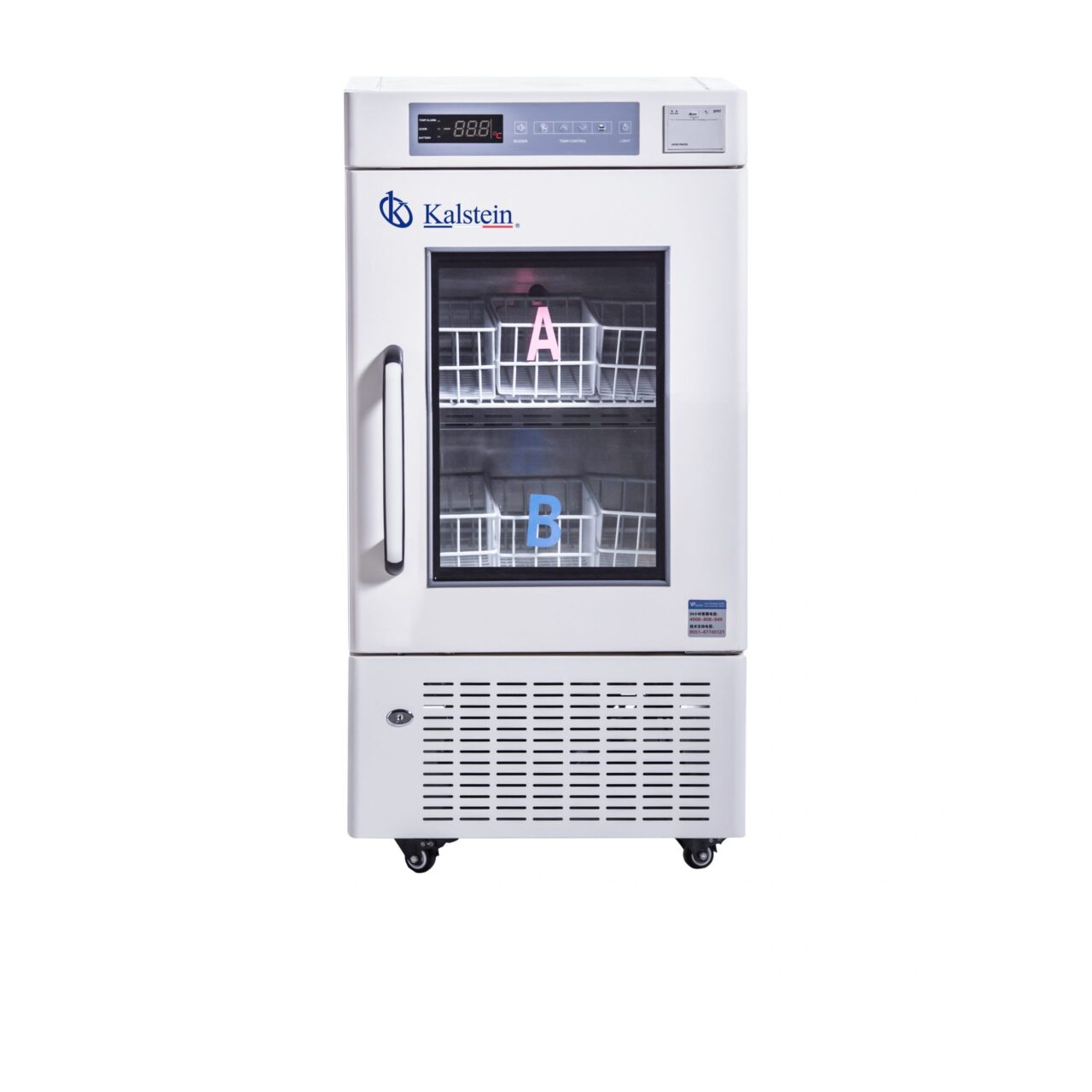
Blood bank refrigerators are crucial in medical and research facilities, providing the necessary environment for storing blood products safely. Among the most notable models are the Blood Bank Refrigerator YR05091 by Kalstein and the Blood Bank Refrigerator HXC-358 by Haier Biomedical. While both offer state-of-the-art technology for blood storage, subtle differences in their features and performance can influence which model best suits particular needs.
The Kalstein Blood Bank Refrigerator YR05091 is engineered with precision, emphasizing optimal storage conditions. It boasts advanced digital temperature control and monitoring systems designed to keep blood at stable, precise temperatures. Its design maximizes storage space, while a user-friendly interface facilitates easy operation, making it a reliable choice for both small and large facilities. In contrast, the Haier Biomedical Blood Bank Refrigerator HXC-358 offers robust storage with a focus on energy efficiency and safety features, seeking to ensure longevity and consistent performance in various conditions.
| Feature | Kalstein YR05091 | Haier HXC-358 |
|---|---|---|
| Temperature Control | Advanced digital control | Efficient energy control |
| Storage Capacity | Larger capacity options | Standard capacity |
| User Interface | Easy, user-friendly | Basic user functionality |
| Safety Features | Multiple alarms and monitoring | Security locks, stable performance |
| Energy Efficiency | Optimized power usage | High energy efficiency |
How They Work
Both the Kalstein YR05091 and Haier HXC-358 refrigerators utilize advanced cooling technology to maintain a stable internal environment. The Kalstein model employs a sophisticated digital thermostat and cooling system that guarantees consistent temperatures, reducing the risk of bacterial growth and spoilage. It features real-time temperature data logging, giving users convenience and peace of mind.
Similarly, the Haier HXC-358 uses advanced cooling mechanisms but places more emphasis on energy efficiency. It employs eco-friendly refrigerants and an insulated design to minimize energy consumption while ensuring temperature stability, crucial for resource-conscious operations.
What They Are Used For
Both refrigerators are essential for the preservation of blood and blood components such as plasma and platelets. They provide the controlled temperature environment necessary to keep these products viable for transfusions and research. Hospitals, blood banks, and research facilities rely heavily on such equipment to meet safety standards and ensure patient and research integrity.
Types
Blood bank refrigerators vary based on capacity, dimensions, door styles (e.g., glass vs. solid doors), and additional features like temperature alarms and chart recorders. Both Kalstein and Haier offer versatile models catering to diverse needs—from compact units for limited spaces to larger units for extensive storage.
Market Pricing
The price range for blood bank refrigerators can vary considerably depending on specifications like capacity and features. Typically, they range from $3,000 to $10,000. The Kalstein YR05091 generally falls into the mid-to-upper range, reflecting its advanced technology and larger storage capacity. Prices for the Haier HXC-358 are competitive, positioned similarly but often focusing on offering economical options with energy-saving benefits.
Frequently Asked Questions
What makes the Kalstein YR05091 stand out in the market?
Its advanced temperature control and monitoring systems, alongside its larger storage capacity options, make it a preferred choice for many medical facilities.
Are there energy-saving features in these models?
Yes, both models incorporate features aimed at reducing energy consumption, with the Haier HXC-358 notably emphasizing energy efficiency.
How durable are these refrigerators?
Both models are built with quality materials ensuring long-lasting performance and minimal maintenance needs, though the Kalstein unit often receives praise for its robustness.
Advantages and Disadvantages
Advantages of Kalstein YR05091:
- Advanced digital control and superior temperature stability
- Spacious capacity suitable for larger storage needs
- User-friendly interface enhances operational efficiency
- Reliable and durable, often exceeding long-term performance expectations
Disadvantages of Kalstein YR05091:
- Higher price point, reflecting advanced features and enhancements
Advantages of Haier HXC-358:
- Emphasizes energy efficiency and cost-effectiveness
- Stable performance with essential safety features
Disadvantages of Haier HXC-358:
- Limited storage capacity compared to Kalstein
Field Use
In practice, the Kalstein YR05091 excels in environments requiring precise temperature control and larger capacity, such as major hospitals and central blood banks. Its comprehensive monitoring systems and real-time data logging make it indispensable for operations needing stringent oversight.
The Haier HXC-358 suits facilities prioritizing energy efficiency, such as outpatient clinics or smaller blood banks, where environmental impact and operational cost are key considerations.
Recommendations
To maximize the functionality and longevity of your blood bank refrigerator, regular maintenance checks and immediate attention to alarm systems are vital. It’s also recommended to ensure adequate ventilation around the unit to maintain optimal performance. Selecting a model aligning with your storage needs will ensure efficacy and cost-effectiveness.
If you are looking for a fusion of innovation and quality, you have come to the right place. At Kalstein we offer you the luxury of exploring our exclusive laboratory equipment catalog. We manufacture each piece of equipment with a level of excellence. Our intuitive and agile online shopping channels are designed for your convenience, ensuring the friendliest prices. Don’t hesitate any longer; we bring science to life, and it is time to be part of our community. https://kalstein.it/product/blood-bank-refrigerator-yr05091/.